In this study, we used magnesium ingot of purity of 99.9% made by electrolytic method.
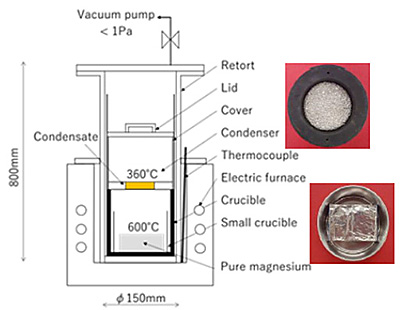
Figure 1 shows the schematic illustration of the vacuum distillation apparatus. The vacuum distillation system consists of a distiller and an evacuation system.
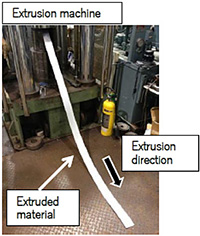
Figure 2 shows the outward appearance of the extruded material. A 400 ton vertical hydraulic press was used.
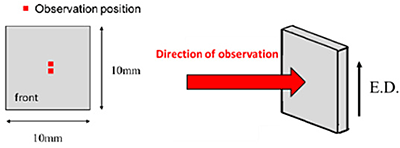
Figure 3 shows the schematic illustration of EBSD observation method. Extruded material was cut out at 10 mm × 10 mm × 2 mm, and two locations near the center of the sample were observed 50 times at EBSD (Electron Back Scatter Diffraction Patterns) in the range of 1500 µm × 1500 µm.
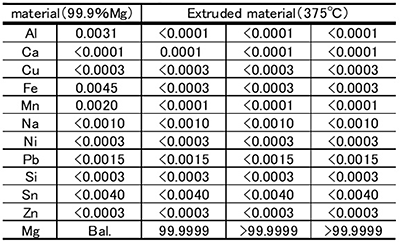
Table 1 shows the chemical composition of extruded material. The chemical composition of the raw material contained Al, Fe, and Mn, but these three elements were not detected in the chemical composition of the extruded material. Therefore, the purity of Mg could be over 99.9999%.
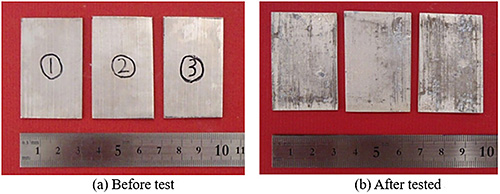
Figure 4 shows the outward appearance before and after the corrosion resistance test. In each after tested specimen, one or two small pits were confirmed, but they showed relatively flat local corrosion.
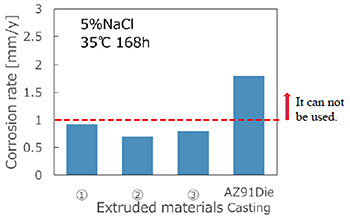
Figure 5 shows the corrosion rate of the extruded material. A result of AZ91D die-castings used most as a magnesium alloy is showed as comparison. Corrosion rate 1 mm/y is a guideline for use. The corrosion rates were all less than 1 mm/y, confirming high corrosion resistance.
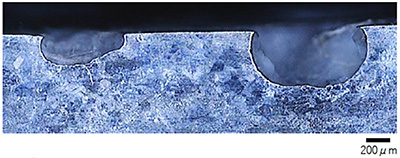
Figure 6 shows the microstructure of the corrosion part in the specimen. Since the shape of the hole is not complicated and round, corrosion is considered to proceed regardless of the grain boundary.
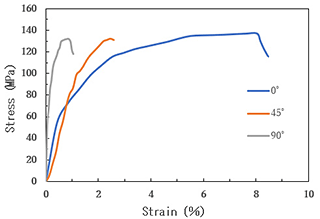
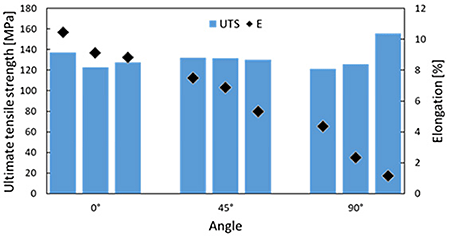
Figure 7 shows the stress strain curves of extruded material. Without elongate sufficiently, 45° direction and 90° direction fracture.
Figure 8 shows the tensile properties of the extruded material. There was no significant difference in tensile strength.
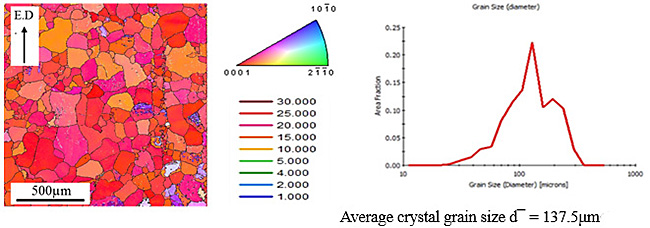
Figure 9 shows the results of EBSD observation of the extruded material. Average crystal grain size is 137.5 µm. Since every crystal grain has almost the same color ({0001} plane), it was confirmed that the grain orientation was aligned and a texture was formed.