Mg
MgThis study was conducted to investigate joint, mechanical properties and fatigue strength of a friction-stir-welded aluminum alloy (FSW material), using a platy extruded shape of JIS A6N01S-T5 alloy as a substrate. Properties of the joint were systematically investigated by optical observation, measurement of two-dimensional hardness distribution, electron-backscatter diffraction (EBSD) analysis, and X-ray residual stress measurement. In particular, crystallographic texture of the joint was considered in detail, based on pole figures obtained by EBSD analysis. Furthermore, mechanical properties and fatigue strength of the FSW material were examined, and also changes of mechanical properties in a corrosive environment were investigated by fully immersing the FSW material in salt water kept at relatively high temperature for a long period.
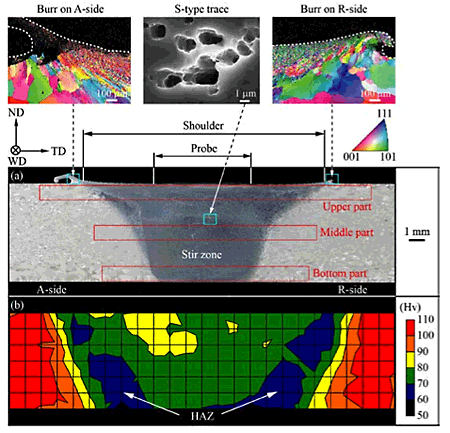
Figure 1 shows the feature and hardness distributions of the joint obtained on the cross section. This figure includes magnified figures of the burrs formed on the top surface by FSW (IPF maps) and of the S-type trace observed in the center of the joint (SEM). In the heat-affected zone (HAZ), reduction in hardness was marked because no refinement of the microstructure occurred and also heat input by FSW weakened precipitation hardening.
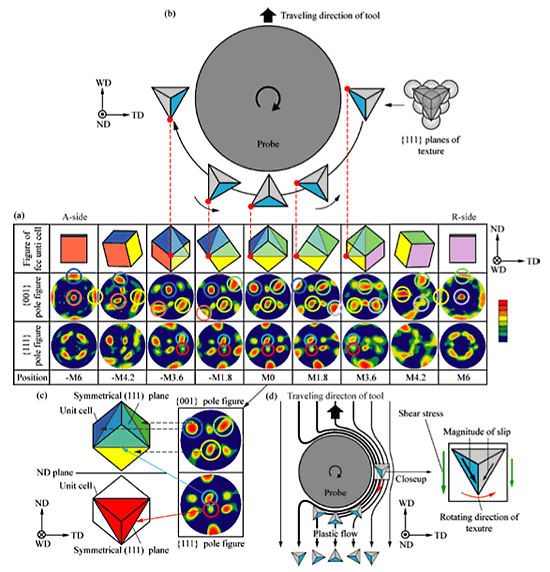
Figure 2 shows the summarized results of the pole figures obtained in the middle part and illustrations to explain the formed crystallographic texture. The substrate possessed a typical cubic crystallographic texture in a platy extruded shape of aluminum alloy. Approaching the stir zone from the substrate side, the texture greatly changed and a pair of symmetrical preferred orientations was formed. In the stir zone, the texture gradually changed along the outside of the probe of a rotating tool. FSW refined the microstructure in the stir zone through dynamic recrystallization.
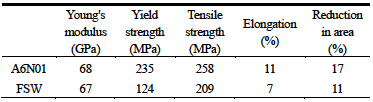
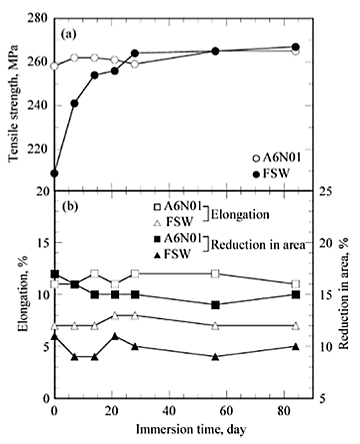
Table 2 shows the mechanical properties of the A6N01 and FSW materials. Concerning the A6N01 and FSW materials immersed in 5% salt water, Fig. 3 shows the relationships of tensile strength and ductility with the immersion time. Tensile fracture of the FSW material occurred along the HAZ; however, tensile strength was maintained at 81% of the substrate. Even after immersion for a long term in salt water kept at a relatively high temperature, no harmful influence of FSW on mechanical properties was found, and rather tensile strength recovered to the level of the substrate by re-aging during immersion.
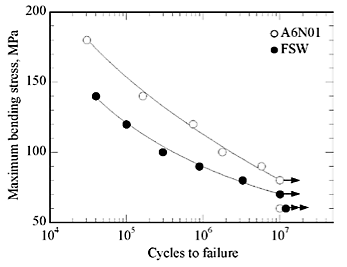
Figure 4 shows the S N curves of the A6N01 and FSW materials. Although fatigue cracks were initiated from the root of burrs formed by FSW, fatigue strength was maintained at 88% of the substrate.